

Salt is one of those things nobody thinks about. It’s cheap, always there, and so ordinary that it barely registers. You buy it, use it, and never question where it comes from or how it’s made.
That’s why the idea that Britain might soon need to import salt sounds almost laughable at first. Surely that can’t be right?
Unfortunately, it is. And once you understand why, it becomes clear that this isn’t really a story about salt at all. It’s a warning about how close the UK is to losing the ability to make some of the most basic things a modern economy depends on.
Salt Is Not Just a Food Product
For most people, salt begins and ends in the kitchen. Industrially, it’s a completely different story.
Salt is a core raw material used in chemical manufacturing. It sits at the very start of supply chains that feed into fertilisers, pharmaceuticals, plastics, cleaning products, water treatment and even parts of the defence sector. Without a steady supply of industrial salt, a surprising amount of modern life becomes harder, more expensive, or impossible to produce domestically.
That’s why recent reporting on the UK chemical industry should have raised more eyebrows than it did. When salt production is under threat, it’s a sign that something deeper is breaking.
Britain Was Never Short of Salt
This makes the current situation even harder to justify.
The UK has substantial underground salt deposits, particularly in parts of Cheshire. For generations, those reserves supported domestic salt production and helped build a strong chemical industry around them. This wasn’t niche or experimental manufacturing. It was basic, reliable, and strategically important.
That industry supplied British farms, hospitals, water utilities and manufacturers. It created skilled jobs and reduced the need to rely on imports for essential materials. It wasn’t flashy, but it worked.
Today, much of that capability is either shrinking or at risk of disappearing entirely.
Why UK Chemical Production Is Struggling
The core problem is simple: it has become too expensive to make basic industrial products in the UK.
Energy costs are the biggest factor. Chemical plants are energy intensive by nature, and UK electricity and gas prices are consistently higher than those faced by competitors overseas. That alone puts British producers at a disadvantage before any other costs are considered.
Regulation also plays a role. Environmental standards matter, but when they are applied without regard for international competition, they don’t reduce global emissions. They simply push production abroad. The UK then imports the same chemicals from countries with lower standards and higher emissions, achieving the opposite of what was intended.
Add weak long term industrial policy and a lack of political focus on “unfashionable” industries, and the outcome is predictable. Investment dries up, plants close, and specialist skills quietly disappear.
The Runcorn Salt Plant and What It Represents
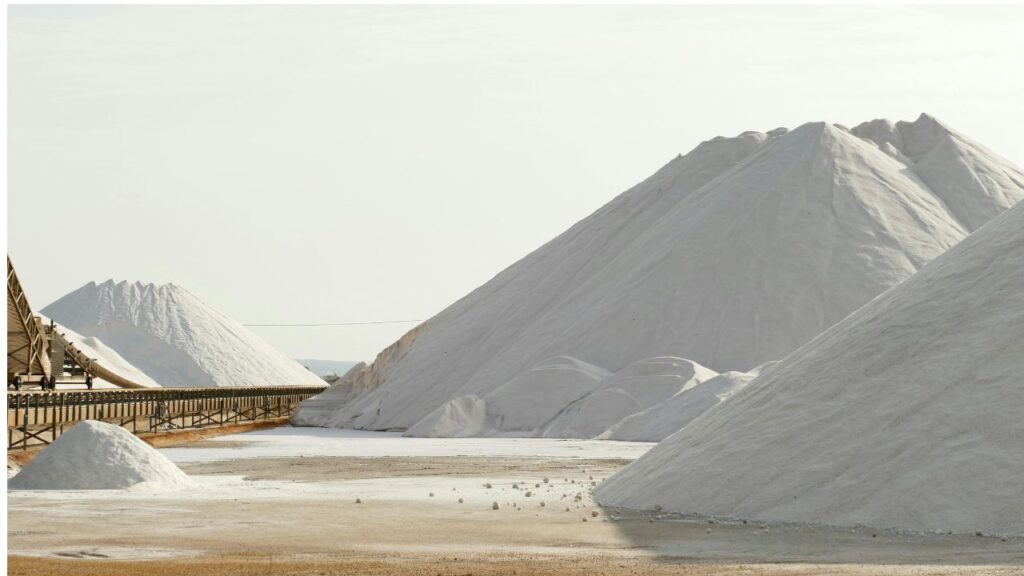
One of the clearest examples of this problem is the salt plant at Runcorn.
If it closes, Britain could find itself importing industrial salt for the first time in modern history. That might sound trivial, but it isn’t. Salt is heavy and low value, which means importing it adds costs immediately. Transport, logistics and exposure to global supply disruptions all come into play.
More importantly, once domestic production is gone, rebuilding it is extremely difficult. Infrastructure is dismantled, workers move on, and practical knowledge is lost. At that point, dependency becomes permanent.
This is how industrial decline locks itself in.
Why This Matters Beyond Industry
It’s tempting to dismiss all of this as an industrial or political issue. It isn’t.
When a country loses the ability to produce basic materials, it loses resilience. It becomes more exposed to global price shocks, shipping disruptions, geopolitical tensions and currency swings. We’ve already seen how fragile supply chains can be when pressure hits.
Now imagine similar disruptions affecting fertilisers, water treatment chemicals or pharmaceutical inputs. These are not luxuries. They are essentials that underpin public health, food security and basic infrastructure.
That’s why this issue matters to people who have never set foot in a factory.
The Myth of “We’ll Just Import It”
Whenever UK industry is discussed, one argument always appears: if something becomes uncompetitive, it’s cheaper to import it instead.
That logic works right up until the moment it doesn’t.
Global markets do not guarantee supply. When shortages appear or demand spikes elsewhere, exporting countries prioritise themselves. Nations with domestic production adapt. Nations without it scramble.
The UK has been steadily choosing dependency over resilience, often without acknowledging the long term cost of that decision.
Salt Is Just the Most Obvious Example
Salt stands out because it is so basic. But the same pattern is playing out across much of the chemical sector, including fertilisers, ammonia and industrial gases.
Each closure weakens the surrounding supply chain. Once enough links break, the entire system becomes fragile. Industries rarely collapse overnight. They erode slowly, then fail suddenly.
By the time the consequences are obvious, the capacity is already gone.
The Financial Reality for the UK
From our perspective, this trend feeds directly into weaker economic fundamentals.
A country that no longer produces essential inputs tends to suffer from lower productivity, slower growth, higher inflation and increased import dependency. Over time, that erodes competitiveness and reduces the pool of strong domestic businesses investors can back.
This isn’t just an industrial issue. It’s a long term wealth issue.
A Quiet Warning Sign
Salt is not the headline. It’s the signal.
Content on IceburgWealth.com is for informational purposes only and not intended as investment advice. While we strive to provide accurate and up-to-date information, Iceburg Wealth is not responsible for any errors or omissions, or for outcomes resulting from the use of this information. Readers should seek professional advice before making any financial decisions.