
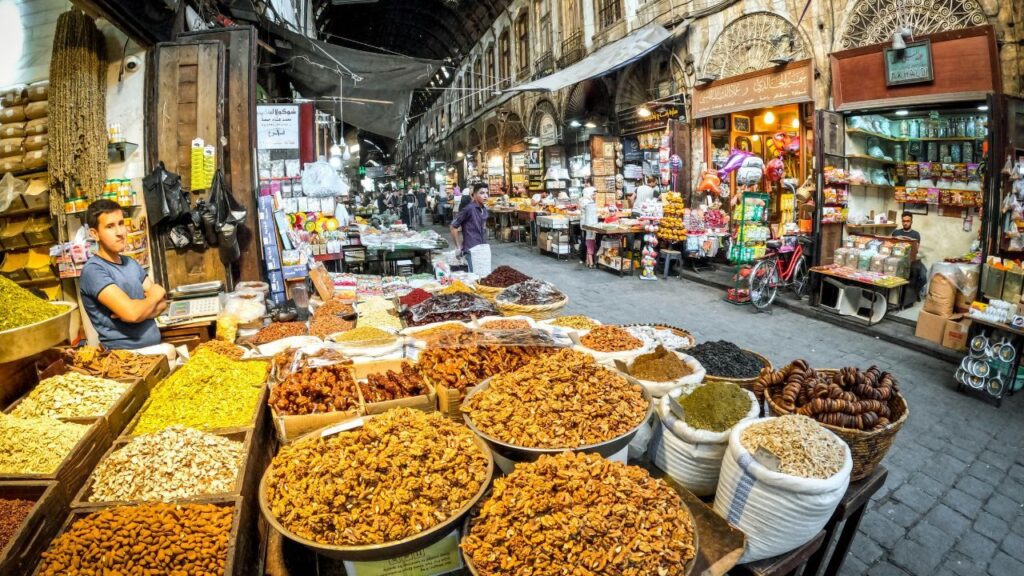
Syria’s economy contracted by 53% between 2010 and 2025 according to Al Arabia Law research published in February 2026. Fourteen years of conflict did not just damage the country. It came close to destroying the economic foundations entirely. Then in December 2024 the Assad regime fell and almost overnight the conversation shifted from survival to reconstruction. The Syria economy in 2026 is moving faster than most people expected and if you are paying attention to where serious money is flowing globally right now, this is a story worth understanding properly.
What Has Actually Changed for the Syria Economy
The biggest single change is sanctions. The United States revoked its comprehensive embargo on Syria in June 2025 according to North Press Agency. The European Union lifted most economic restrictions in May 2025 according to the same source. These are not symbolic gestures. They removed the legal framework that had prevented international banks from processing Syrian transactions, blocked energy investment and choked off most forms of trade for over a decade.
The EU committed £2.1 billion for Syria in 2025 and 2026 according to Enab Baladi’s reporting on the Brussels donor conference. The World Bank estimated Syria’s post conflict reconstruction costs at £170 billion according to their October 2025 press release. £22 billion in foreign investment has been committed to Syria since sanctions were lifted according to Al Arabia Law’s February 2026 research. Those are not rounding errors. That is serious institutional money beginning to move.
The IMF visited Damascus in November 2025 and described Syria’s economy as showing signs of recovery and improving prospects according to their published mission statement. Over one million Syrian refugees returned home following the regime change according to Human Rights Watch’s 2026 World Report. Syrian President Ahmed al-Sharaa met with Donald Trump in Washington in November 2025 according to the Security Council Report. The first visit by a Syrian head of state to the White House since 1946. The diplomatic normalisation has been remarkably fast.
Where the Money Is Going in the Syria Economy in 2026
Early movers from Turkey and the Gulf states have been securing positions in the sectors that matter most. Here is where the serious investment is actually landing.
Energy
Electricity supply is down 80% from pre-war levels according to Al Arabia Law. A £5.5 billion power generation consortium is expected to create 50,000 direct jobs and 250,000 indirect positions according to the same source. American energy major Chevron entered discussions with the Syrian government in December 2025 and offshore exploration agreements with Turkey are planned for 2026 according to Al Arabia Law’s Damascus office research. Syria was an oil producer before the conflict. Getting production back online is central to rebuilding state revenues and it is one of the sectors attracting the most serious investor attention right now.
Infrastructure and Construction
With £170 billion in reconstruction needs according to the World Bank, infrastructure is the largest single opportunity. Roads, water systems, housing, ports. Everything needs rebuilding. Syria’s location as a transit corridor between Europe, Asia and the Middle East adds strategic value on top of pure reconstruction demand. Syrian President al-Sharaa stated in April 2026 that Syria represents a safe corridor and an alternative energy route, particularly relevant after regional supply chain disruptions according to Enab Baladi.
Agriculture
Before the conflict Syria was a significant agricultural producer. Wheat, citrus and olives were key exports. The sector was devastated but the return of refugees to farming regions and improving security in agricultural areas creates conditions for recovery. Rebuilding irrigation infrastructure is one of the most straightforward reconstruction opportunities given the country’s underlying agricultural advantages.
A Real World Example of What This Looks Like
Turkish construction firms that secured early positions in Syrian infrastructure contracts in early 2025 are now operating in a market where the rules have been clarified by sanctions removal and demand for construction materials, equipment and expertise is essentially unlimited. A company that committed £40 million to Syrian infrastructure in early 2025 would today be operating in a market that has attracted £22 billion in total commitments and where the World Bank, IMF and EU are all actively supporting the institutional framework required to make business viable long term. First mover advantage in frontier reconstruction markets historically produces significant returns for those who get the timing right.
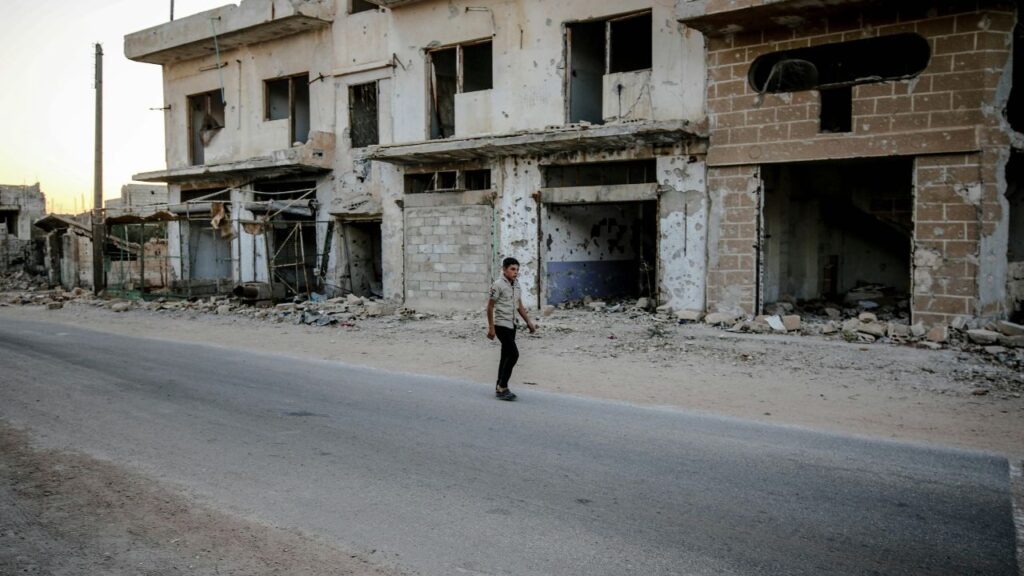
The Syria Economy in 2026: Risks That Cannot Be Ignored
GDP growth is expected at only 1% in 2025 following a 1.5% contraction in 2024 according to the World Bank’s July 2025 macro fiscal assessment. Lifting sanctions does not automatically create economic activity. International banks remain cautious about Syria due to ongoing compliance concerns and weak institutional frameworks according to the IMF and World Bank analysis.
Security challenges persist. UN reports indicate roughly one third of Syrians live in extreme poverty with up to 90% affected by some form of poverty according to North Press Agency. Prices of basic goods rose more than 50% in the first half of 2025 according to the same source. The transitional government launched a redenominated currency in 2026 which carries its own risks if the monetary transition is not managed carefully.
Political risk is real. The transitional government faces the challenge of unifying territorial control, managing relations with Kurdish authorities in the northeast and building institutional credibility from a very low starting point. The World Bank notes that reliable economic data for Syria remains extremely scarce according to their July 2025 report. That data gap itself tells you something important about how early stage this recovery actually is.
Syria Economy 2026: Questions People Are Actually Asking
Is Syria Safe to Invest In Right Now?
It depends entirely on sector, location and structure. Early movers from Turkey and the Gulf are operating there and the international institutional framework is more supportive than at any point since 2011. For most ordinary UK investors direct exposure is not practical or appropriate at this stage. For institutional investors and specialist frontier market funds with the right risk appetite and local knowledge the opportunity is credible. The £170 billion reconstruction estimate from the World Bank gives you the scale of what is required.
What Did the Lifting of Syria Sanctions Actually Mean?
It meant US and EU entities could legally engage with Syrian government institutions, banks and businesses for the first time in over a decade. The practical impact is gradual because international banks remain cautious about compliance risks even after legal sanctions are removed according to IMF analysis. But it opened the door to reintegration with the global economy and the investment that follows. The EU’s formal political contacts resumed in May 2026 according to Enab Baladi and trade cooperation is now being structured through Mediterranean economic frameworks.
How Does Syria’s Reconstruction Affect the UK?
The Syrian Embassy in London reopened in November 2025 according to the Security Council Report, signalling a normalisation of bilateral relations after more than a decade. The EU’s £2.1 billion commitment includes support channelled through European businesses. UK firms in construction, energy, agriculture and infrastructure have potential exposure to the reconstruction opportunity through European operations and supply chains. It is not a direct play for most people but it is a market that UK businesses with the right relationships could access.
Pay Attention to This One
The Syria economy in 2026 is not a charity story. It is a genuine reconstruction opportunity backed by the World Bank, IMF and EU with £22 billion in foreign investment already committed and £170 billion in identified need. The risks are real, the institutional foundations are fragile and the data is poor. But the same was true of every major post-conflict reconstruction market that later produced significant returns for early participants.
You probably cannot invest directly and most people reading this should not try to yet. But understanding what is happening there, who is moving in and what the institutional backing looks like is the kind of informed awareness that separates people who see opportunities early from people who read about them afterwards.
Iceburg Wealth does not provide regulated financial advice. Everything here is based on personal experience and research. Always do your own due diligence before making any financial decisions.